
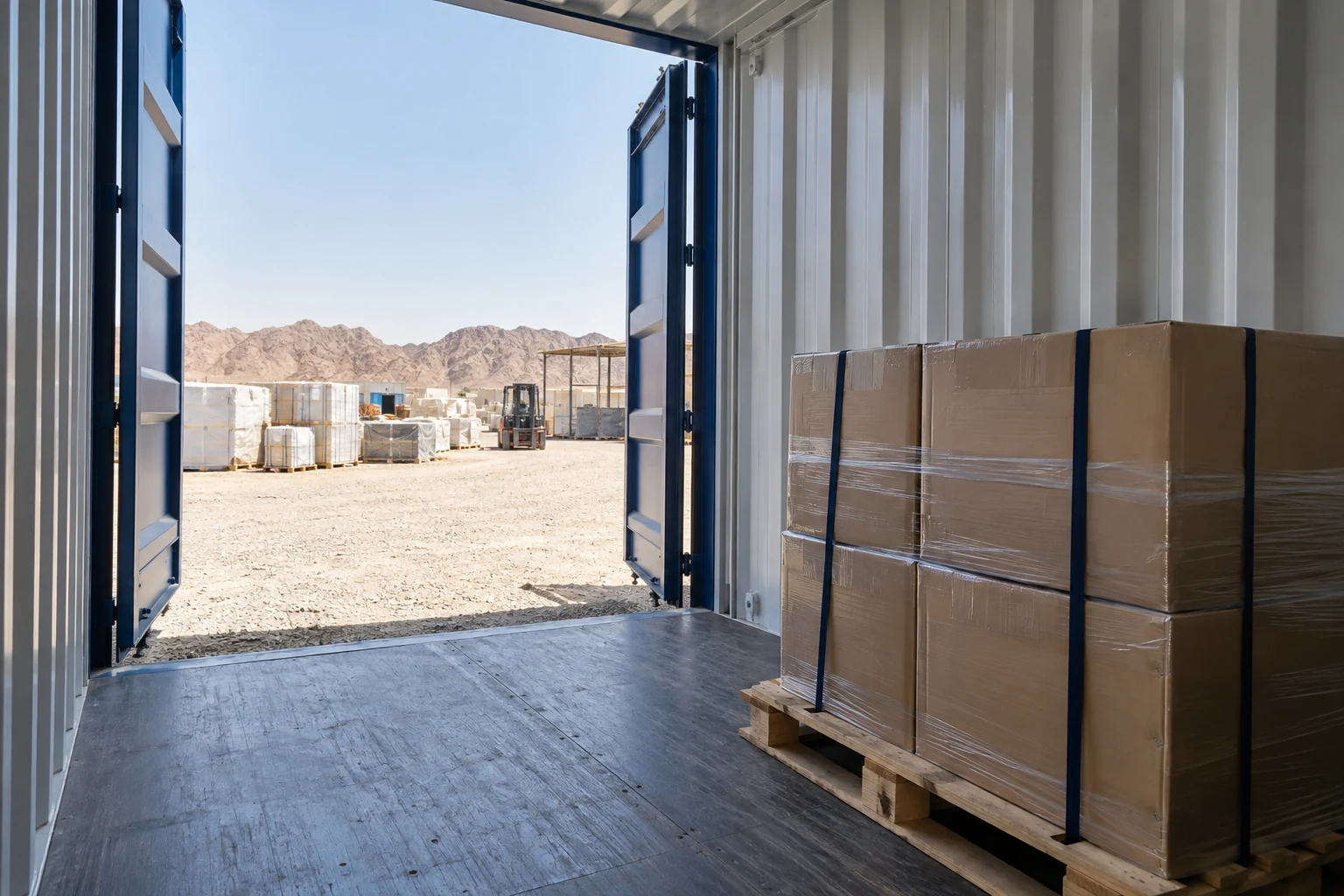
Mobile storage may suit temporary demand, a seasonal peak or a work site with changing needs when bringing stock closer to use is more appropriate than repeated movement to a fixed warehouse. The decision still depends on product, site, duration and handling requirements. An available space alone does not establish suitability.
Define why storage is needed
Explain the issue: a seasonal inventory increase, materials needed near a project, or a transition between locations. A clear problem helps compare mobile storage with specialist warehousing or direct transportation instead of choosing it only because it initially appears convenient.
State the expected duration and what could extend or shorten it. Describe how the goods will be used during that time. Holding a closed quantity differs from receiving and issuing products every day. The useful information is the intended operating pattern, not only the project’s name.
Review the site arrangements
Describe access, the proposed storage area and movement of people and vehicles around it. Identify who will review the site and any arrangements that need approval. Do not assume every available area can be used without checking site and relevant authority requirements.
Discuss receiving, loading, unloading and how staff will access goods. Changes to the project layout can affect usability. These operating details belong in the initial discussion rather than being discovered after the arrangement is confirmed and stock has arrived.
Make product conditions part of the decision
Identify the goods, packing units and storage or protection requirements from approved information. “Mobile” does not imply suitability for every product, refrigeration, freezing or a special specification. Each condition requires a review of product needs and the actual scope that can be provided.
For mixed goods, discuss whether they can be stored together and how separation and handling should work. Define how damaged packs or stock awaiting a decision will be managed. Proximity to the work site does not remove the need to understand which stock is available to issue.
Plan movements as well as holding stock
Explain receiving frequency, issue quantities, who authorizes release and who receives the goods. Agree a reference for recording movements. Stock can be physically close while remaining difficult to use if the team cannot establish what arrived, what left and what is available.
Review transport and distribution links, particularly when several sites are supplied or the point of use changes. Moving a unit, transferring goods and handling activity should not be assumed included unless stated. Each affects scope, arrangements and responsibility.
Clarify flexibility and its limits
Ask how changes in duration, quantity or site will be reviewed and what information is required. Distinguish fixed arrangements from those open to adjustment. Flexibility is useful when expressed as a clear process, rather than a promise that every change can be delivered on unchanged terms.
Compare the complete period and its activities, not only a daily or monthly price. Include setup, receipt, handling, transport connections and closure. If the duration is unresolved, several clearly defined scenarios can support a better discussion than one precise but unsupported estimate.
Plan the end of use
Decide what happens to remaining goods when the season or project ends. Identify the onward destination and how quantities and condition will be reviewed. Closing a site or reaching an agreed date does not eliminate responsibility for the inventory.
United Investment Company offers mobile storage for seasonal projects, temporary needs and work sites, with related warehousing, inventory and transport services available for discussion. Use the form below to explain the site, goods, duration and expected quantities without assuming unconfirmed unit sizes, equipment or prices.
Mobile storage enquiry checklist
- The reason for storage, duration and possible changes.
- Site access, available area and handling arrangements.
- Goods, quantities, packing and storage conditions.
- Receipt, issue and transportation patterns.
- Remaining-stock destination and end-of-use plan.
Frequently asked questions
Is mobile storage suitable for every product?
Suitability depends on product conditions, the site and the operation. The term does not establish a special specification.
Does the service automatically include moving goods or the storage unit?
Included activities and responsibilities need to be explicitly defined in the quote.
Can I enquire before the duration is fixed?
Yes. Describe the expected range and change scenarios so the appropriate scope and arrangements can be reviewed.