
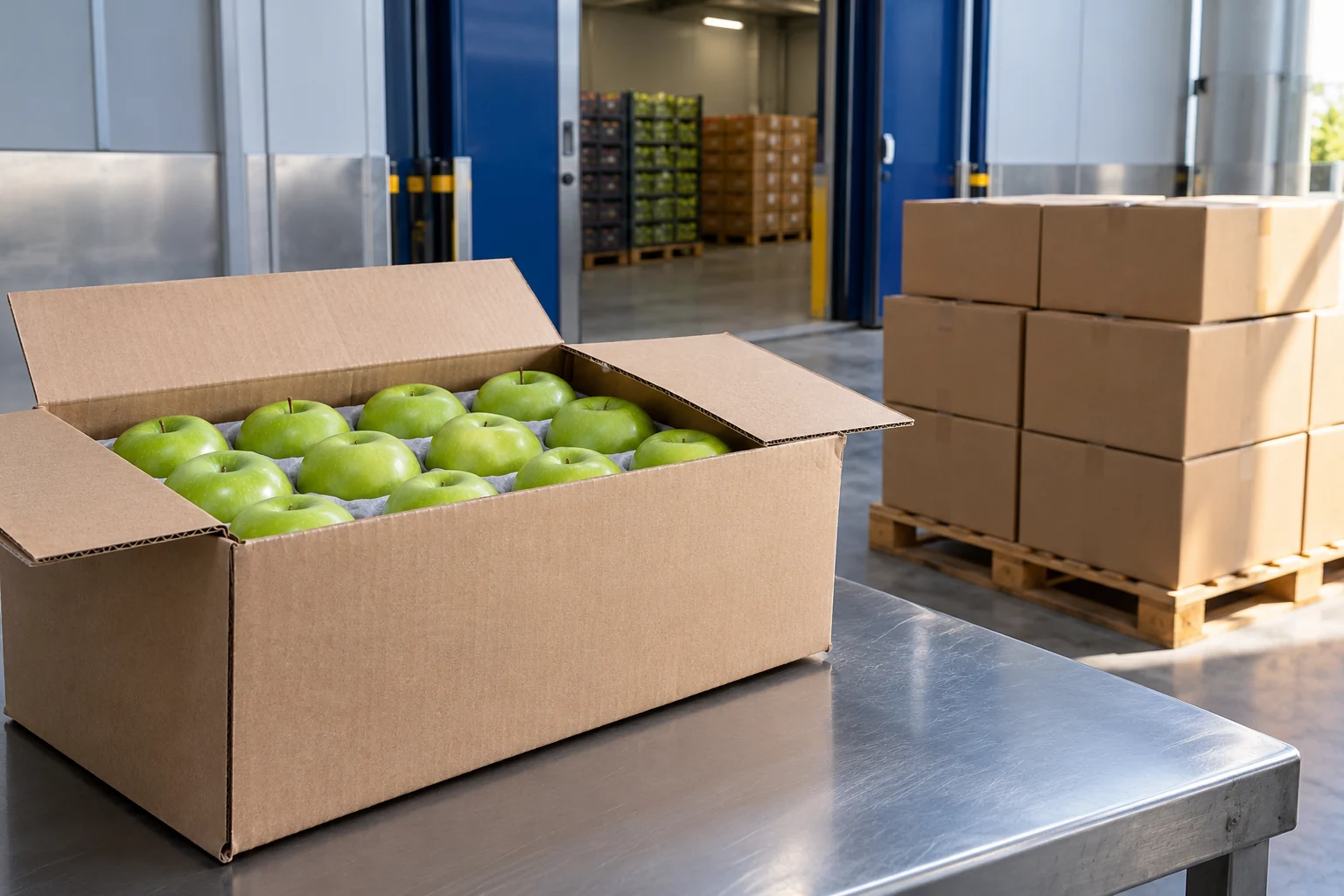
Food storage and distribution require product needs to be connected with storage, handling, transport and receiving arrangements. A broad warehouse or vehicle category is not sufficient. Begin with each product’s instructions and applicable requirements, then define the operating journey, information and responsibilities.
Build a clear product brief
List the products, categories, packing units and approved storage instructions. Identify differences between dry, chilled and frozen storage needs. Do not substitute an estimate based on a similar product or a broad food category for the instructions that apply to the actual goods.
Add shelf-life information and batch references where relevant to the operation. Review packaging condition and instructions concerning opening shipping units or preparing orders. Every party should understand what will be received and how it should be handled, rather than leaving technical information fragmented between teams.
Review the relevant requirements
SFDA’s Food Hygiene Requirements address aspects of storage, transportation, hygiene and traceability across the food chain. Check the provisions relevant to the particular product, activity and location. This guide supports an operating discussion; it does not replace official requirements or verification of the proposed arrangement.
Identify requirements you need confirmed and ask the team to review the applicable scope and evidence. Serving the food sector should not be interpreted as proof of an unverified certification or authorization. The actual product, process and agreed scope need to align with demonstrated capability.
Examine receiving and handling
Discuss how quantities, packaging condition and accompanying information will be checked at receipt. Define the response to differences, damage or missing information and who can accept, hold or request clarification. Stock with unresolved status should not simply join the normal distribution flow.
Review stacking, access and separation needs based on the goods. Explain whether opening packs or assembling orders changes the handling requirement. Holding closed shipping units is a different operation from repeatedly preparing small orders from the same inventory.
Connect dispatch to transportation
Define order preparation, checking and collection from storage. Discuss conditions during waiting, loading, travel and unloading. The time between warehouse and destination is part of the plan rather than a stage whose suitability can be assumed without review.
For multiple destinations, describe quantities, delivery sequence and receiving windows. Avoid one universal promise across locations with different access arrangements. Transportation should reflect the products and agreed plan, not merely vehicle availability at the requested time.
Agree useful operating information
Establish references linking receipts, inventory and outbound orders and decide which data supports stock and status review. Define discrepancy handling and decision ownership. Recording is useful when it supports an enquiry or exception, not simply because a large number of fields exist.
Where stock is held or returned, review its next step with the responsible party before treating it as available. Do not adopt one return rule that overrides product instructions or the product owner’s arrangements. Agree how an exception reaches the appropriate decision-maker without assuming an automatic outcome.
Scope the product journey
Provide product types, storage instructions, quantities, packing units, duration, movements and destinations. Highlight additional requirements for review without sending sensitive records in an initial enquiry. Clearly identify any unresolved part of the plan.
United Investment Company lists food companies among the sectors it serves and offers warehousing, inventory, preparation, transport and distribution services. Suitability and scope need to be reviewed for the products before a quote is agreed. Use the form below without assuming temperature ranges, authorizations or specific procedures that have not been verified.
Food logistics discussion checklist
- Products, packing and approved storage instructions.
- Shelf life and batch references where relevant.
- Quantities, duration and receiving or preparation activity.
- Destinations, receiving windows and transport needs.
- Exception types and the party responsible for decisions.
Frequently asked questions
Do all foods share one storage condition?
No. Use product instructions and relevant official requirements, then assess storage, transportation and operations against them.
Does serving the food sector prove a specific certification?
No. Verify requirements and evidence relevant to the actual product and activity rather than inferring them from a general description.
Should transport be considered separately from storage?
They should be reviewed as one product journey, including waiting, loading, delivery and receiving arrangements.